
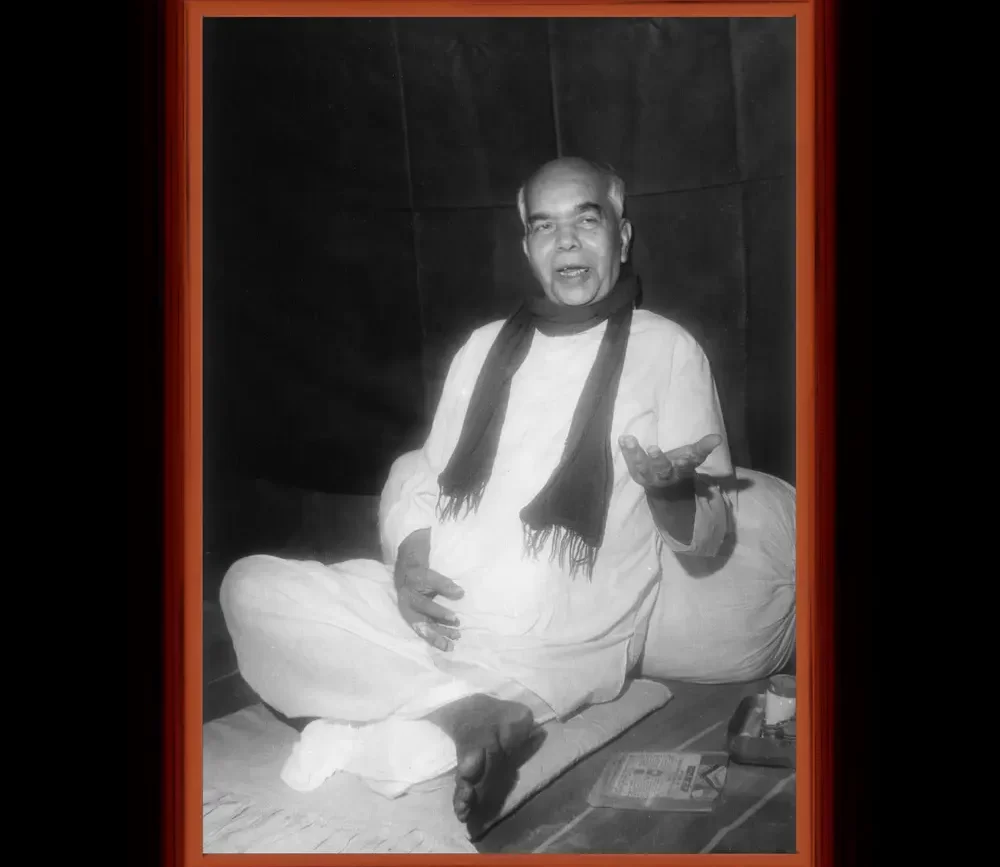
Gayanacharya Gururao Deshpande
Pandit Gururao Deshpande was one of the towering figures of Hindustani Classical Music—a vocalist whose artistry transcended Gharana boundaries and set new standards of musical excellence.
Born in 1889 in Karnataka to Narayanrao Deshpande, a Carnatic musician, Gururao was drawn early towards Hindustani music. His formal training began under Sri Dattopant Joshi and Sri T.K. Pitre, and later, under the legendary Pandit Ramkrishnabuwa Vaze of the Gwalior Gharana.
Gururao’s gayaki was a unique confluence of multiple Gharana styles. While firmly rooted in the Gwalior tradition, he seamlessly integrated the sur-bhava of Kirana, the layakari of Jaipur, and the expressive richness of Agra. His renditions were known for their clarity, depth, emotional intensity, and technical brilliance—earning him admiration from connoisseurs and critics alike.
A celebrated performer across India, including in pre-Independence Pakistan, Gururao’s voice resonated at every major music festival of his time. He was also a passionate exponent of light classical forms like Thumri and Tappa, and brought rare depth to Kannada and Marathi Natya Sangeet and devotional music.
Gururao was a pioneer in presenting Kumara Vyasa Bharata through Hindustani ragas and raginis using the Gamaka style. In recognition of his contributions, he was honoured with the title Gamak Gowri Shankara.
His legendary performance at a baithak in Kolhapur, where Ustad Alladiya Khan remarked, “Beta, tere gaane mein aankh hai,” marked the beginning of an illustrious journey. Recognized by contemporaries like Ustad Faiyaz Khan, Kesarbai Kerkar, and Abdul Karim Khan, Gururao became known as a musician’s musician.
Beyond performance, Gururao served as a music producer for All India Radio, Dharwad, contributing 16 years of dedicated service. He was honored with the title “Gayanacharya” at the Sawai Gandharva Mahotsav and later by the Sangeet Natak Akademi.
An advocate of discipline, education, and spiritual depth, Gururao embodied the values of a true guru. He balanced rigorous musicianship with philosophical grounding—drawing spiritual inspiration from Gurudev R.D. Ranade, and practicing daily recitations of Jnaneshwari and Dasbodh.
He was an avid admirer of Shakespeare, Wordsworth, and Milton, and also pursued a deep interest in astrology.
He left behind a legacy not just of recordings and disciples, but of a holistic musical philosophy—where art, intellect, and inner pursuit came together. His music continues to guide and inspire generations.